Solar lentigines are common age-related pigmented spots, often seen from the forties or fifties onward.
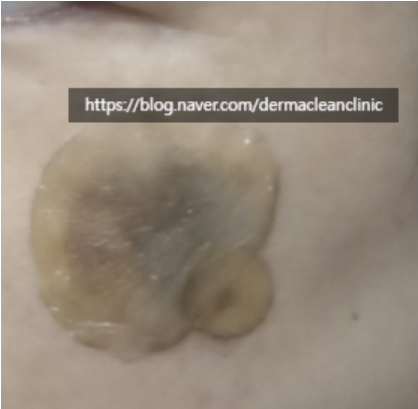
Hydrocolloid dressing covering a treated facial area.
REEPOT and ruby lasers are used to treat suitable solar lentigines. Recovery after REEPOT may involve keeping a DuoDERM hydrocolloid dressing over the treated area for about two to three weeks.
Can REEPOT also treat Ota-like pigmentation?
Acquired bilateral nevus of Ota-like macules, or ABNOM, is a different kind of pigmentation from a solar lentigo. More pronounced cases can produce clusters of blue-gray or dark pigmentation around the cheekbones and cause considerable distress.
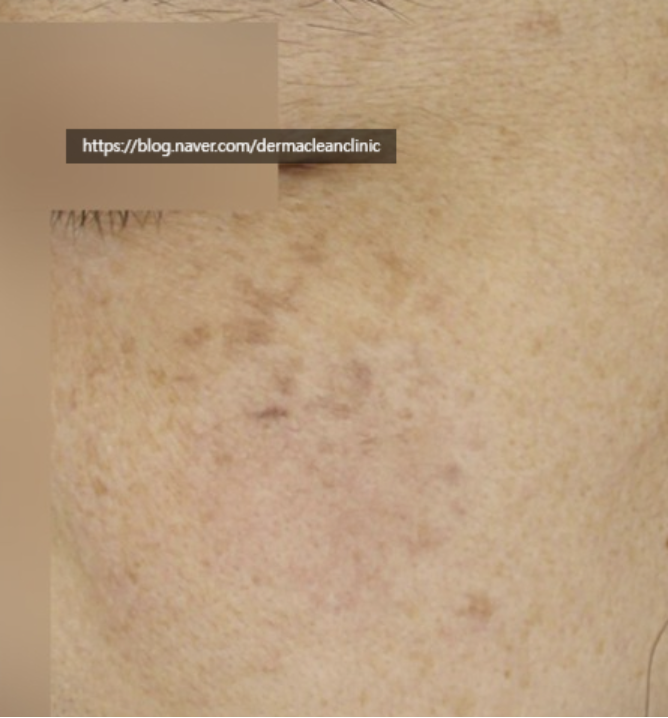
Acquired bilateral nevus of Ota-like macules (ABNOM) around the cheekbone.
Dermal pigmentation calls for a different laser approach
ABNOM is a condition in which pigment lies in the dermis, the deeper layer of skin. It is seen particularly in Asian women and usually develops in adulthood, from the twenties through the forties. It is more common in women than in men. Symmetrical gray-brown or blue-gray patches commonly affect the cheekbones, areas around the eyes, and temples.
REEPOT is not a universal solution. A Q-switched laser operating at 532 nm, such as REEPOT, has limitations for deeper pigment such as ABNOM.
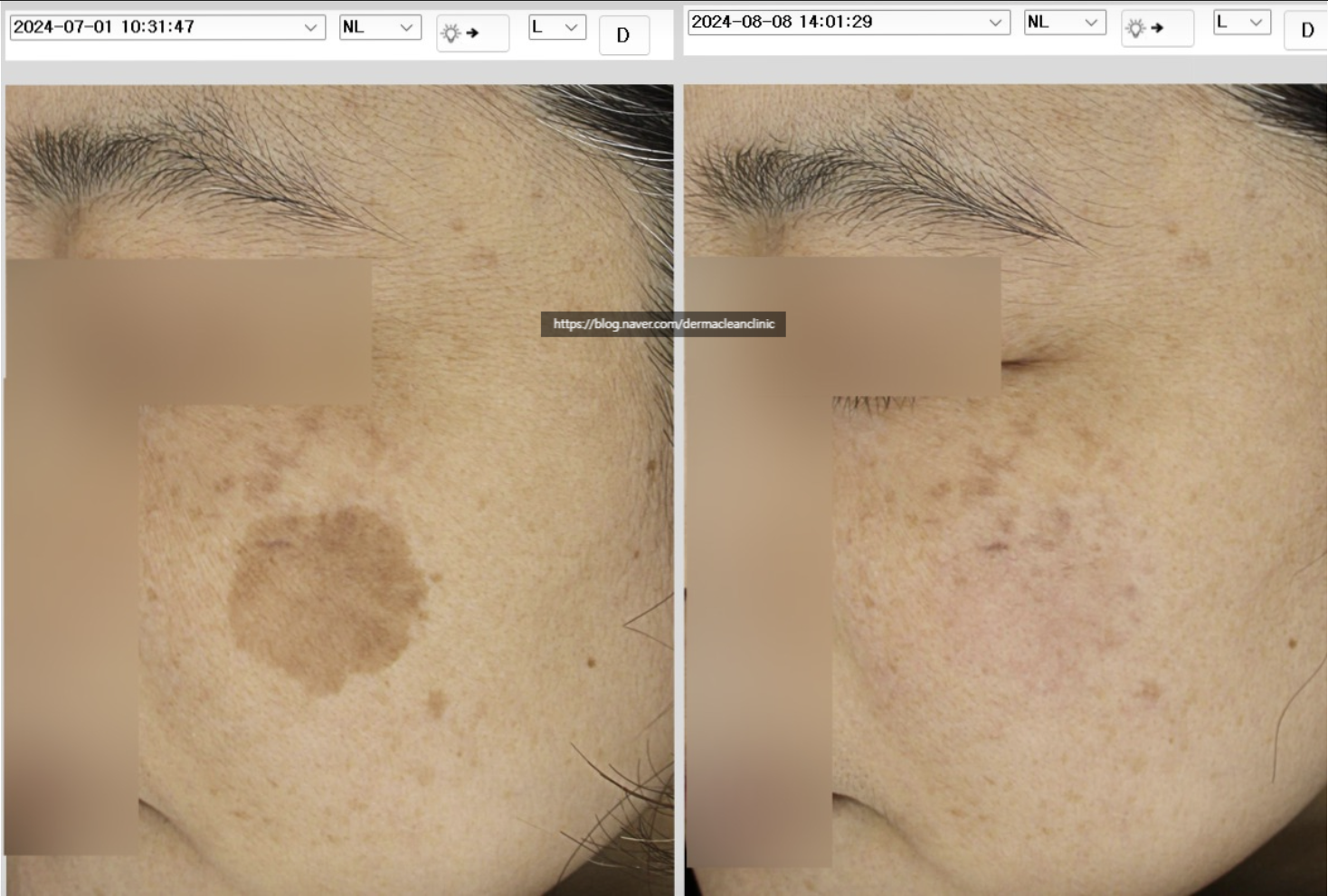
Deeper Ota-like pigmentation remains visible after REEPOT treatment of the coexisting solar lentigo.
In the case shown, a large solar lentigo cleared after one treatment, while the deeper Ota-like pigmentation remained. Selectively targeting dermal melanin requires both adequate depth of penetration and sufficient energy at the target.
Picosecond Nd:YAG lasers at 1064 nm and picosecond alexandrite lasers at 755 nm are more relevant to these requirements than REEPOT. Q-switched ruby lasers at 694 nm are also used for dermal pigment, but excessive energy can increase the risk of areas of reduced pigmentation. Careful combinations with the other wavelengths may therefore be considered. No single laser is automatically best: wavelength and energy need to be matched to pigment depth and skin type.
ABNOM generally calls for repeated treatments spaced months apart and gradual lightening, rather than the one-session clearance sometimes seen with a solar lentigo.
Melasma and a tendency toward pigmentation can complicate recovery
Temporary redness, swelling, and PIH can occur after treatment, making sun protection and aftercare important. When melasma or a strong tendency toward pigmentation is also present, PIH can interfere with the course of care. In more marked cases, another treatment may need to be postponed and the overall treatment period extended.
A treatment approach suited to the individual’s skin type may lead to gradual improvement, but the response and overall duration vary between people.