Winter is a common time to seek treatment for melasma, freckles, small dark spots, and solar lentigines. A frequent question is whether a ruby laser also works for melasma. The medical meaning of melasma is not always the same as the way people use the word in everyday conversation, so the approach needs to distinguish between them.
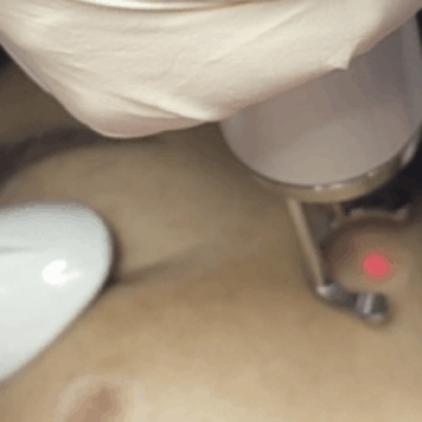
Still frame from a ruby-laser procedure animation.
True melasma is not treated in the same way as an isolated dark spot
Melasma reflects a combination of an impaired skin barrier, sensitivity, a tendency toward inflammation, changes in the dermal environment, inherited predisposition, aging, and damage from ultraviolet exposure.
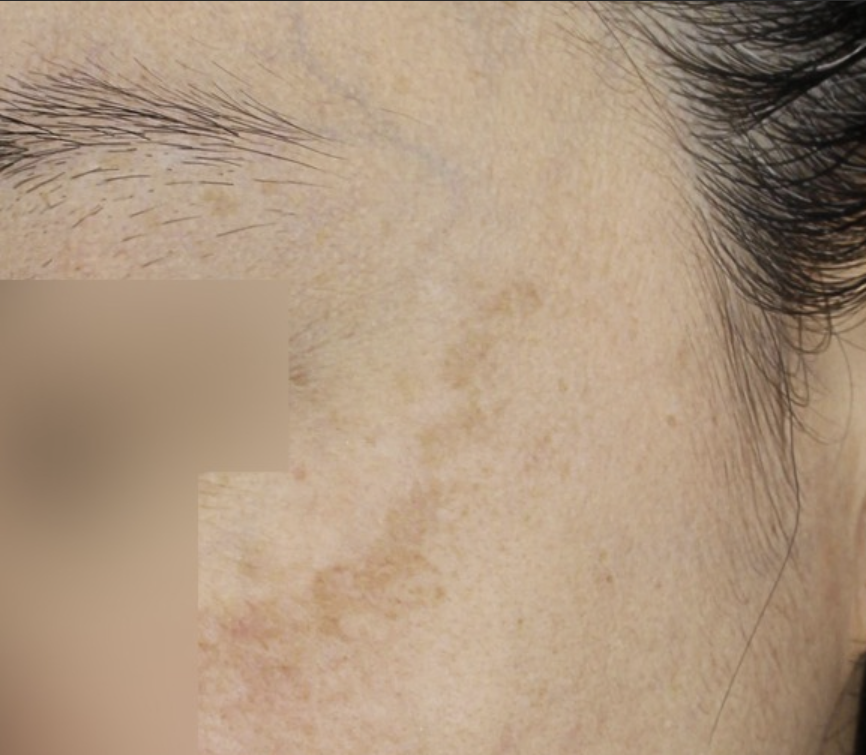
Example labelled as typical melasma.
It is not a condition that can simply be removed with a single, high-intensity treatment in the way some freckles or discrete dark spots can. Care needs to address the damaged dermal environment while allowing accumulated melanin, the pigment that gives skin its color, to clear gently.
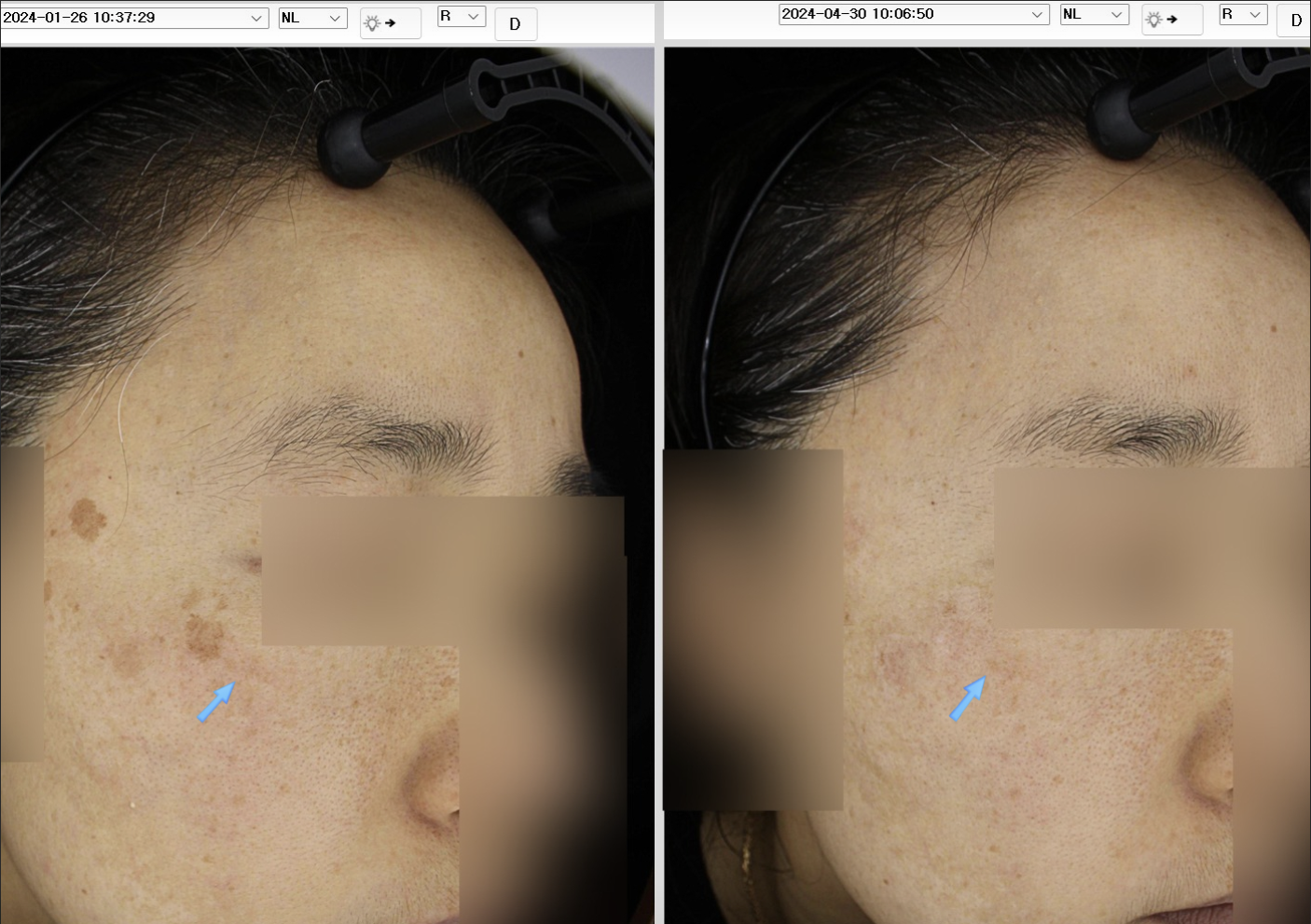
Side-by-side photographs presented as the three-month course after REEPOT treatment for a solar lentigo, with residual melasma indicated by blue arrows.
Melasma and solar lentigines can occur together. The illustrated case was photographed three months after REEPOT treatment for solar lentigines. The treated lentigines had cleared, while melasma remained around the eyes. In skin with melasma, patchiness and residual marks can also last longer after treatment, so aftercare requires greater attention.
High-output lasers such as REEPOT or a ruby laser can produce improvement in suitable solar lentigines or dark spots over a relatively short period. Melasma can complicate that process and needs to be considered separately.
How should melasma that remains after lentigo treatment be managed?
Once REEPOT or ruby-laser treatment for solar lentigines has been completed without major problems, treatment can focus more actively on the remaining melasma, including in sensitive skin prone to pigmentation. Active treatment does not mean high-intensity treatment. The first step is to address whichever of the following problems is most pronounced or out of balance:
- Barrier damage
- Dryness
- Increased blood vessels and redness
- Sensitivity
- A tendency toward inflammation
Home care can also make a meaningful difference. Excessive cleansing, ultraviolet exposure, and insufficient moisturizer use can contribute to these problems. Avoiding double cleansing, choosing a mildly acidic facial cleanser, reducing pressure and rubbing during washing, and using a moisturizer rich in moisturizing ingredients may help.
“My melasma has worsened after a long period of neglect. Can treatment help?”
A busy routine can leave little time for skin care. When melasma has become more pronounced, appropriately gentle laser treatment or skin-booster procedures may be combined with care of the underlying skin condition to support more timely improvement.