Dark marks left after breakouts are a common concern in sensitive skin. This is called post-inflammatory hyperpigmentation, or PIH: increased pigmentation that remains after inflammation. Laser toning or a pigment-targeting laser may be the first treatment that comes to mind.
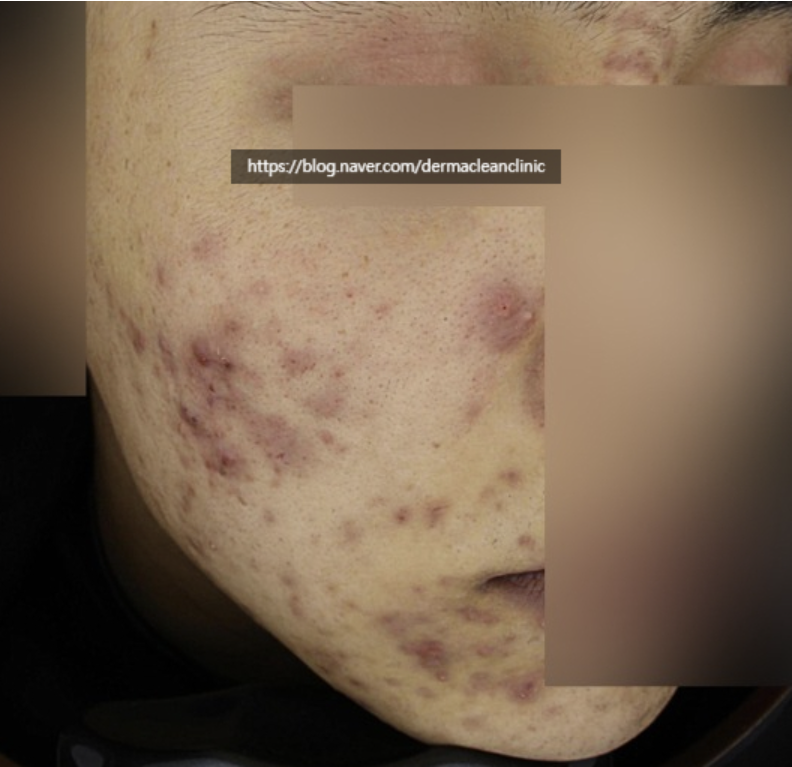
Inflammatory acne and residual pigmentation are shown together.
However, pigmentation in acne-prone or sensitive, breakout-prone skin requires a different approach. Indiscriminate use of pigment lasers can sometimes worsen the problem.
Why are these marks often seen with adult acne?
Post-acne pigmentation is more commonly seen in adults in their thirties or older with adult acne or sensitive-skin breakouts than in teenage acne, particularly when age-related skin changes coexist.
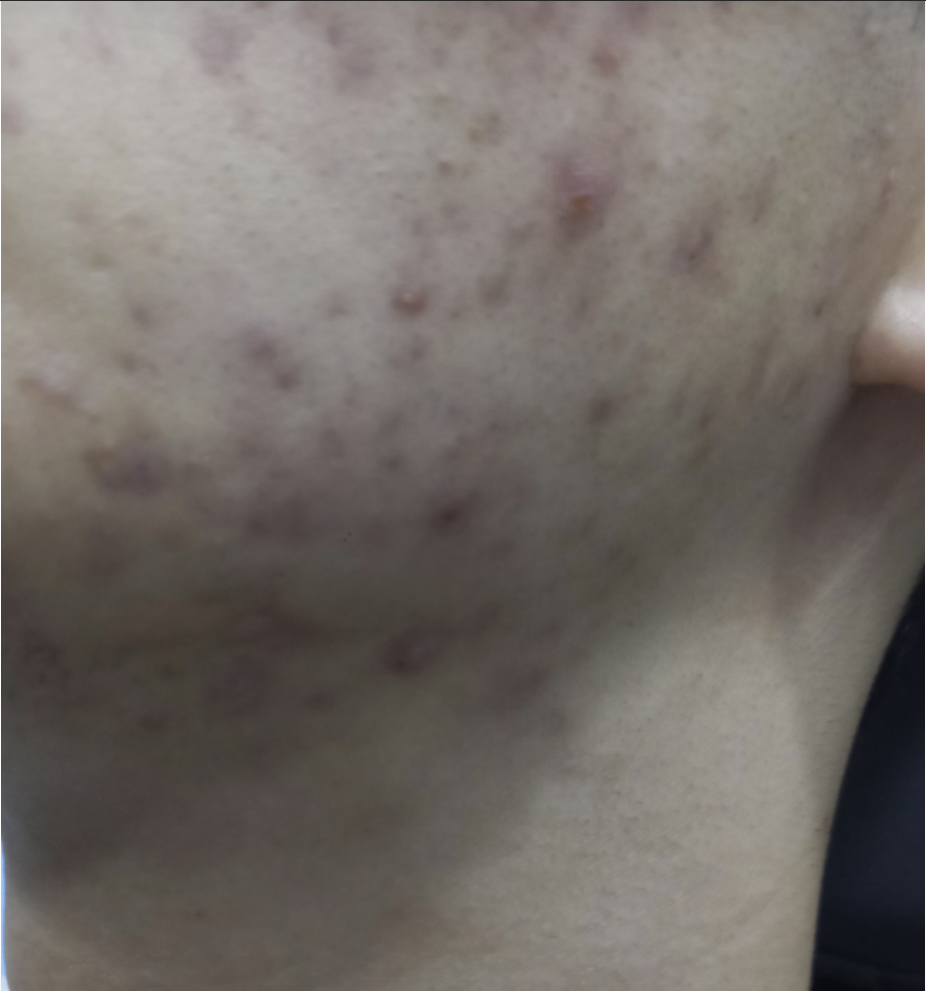
Adult acne commonly affects the chin and is often accompanied by residual pigmentation.
In skin prone to pigmentation, brown or red marks can remain long after an individual breakout has settled. Treatment needs to consider inflammation, reduced regenerative capacity, and age-related skin damage together.
When patients describe prolonged laser treatment without improvement, or increasing sensitivity and worsening skin, their treatment histories often suggest that factors such as excess oil, sensitivity, a tendency to pigmentation, and barrier damage were not adequately addressed.
What underlies post-acne pigmentation?
These marks are not simply a pigment problem. Repeated inflammation, excess sebum, and damage to the skin barrier act together.
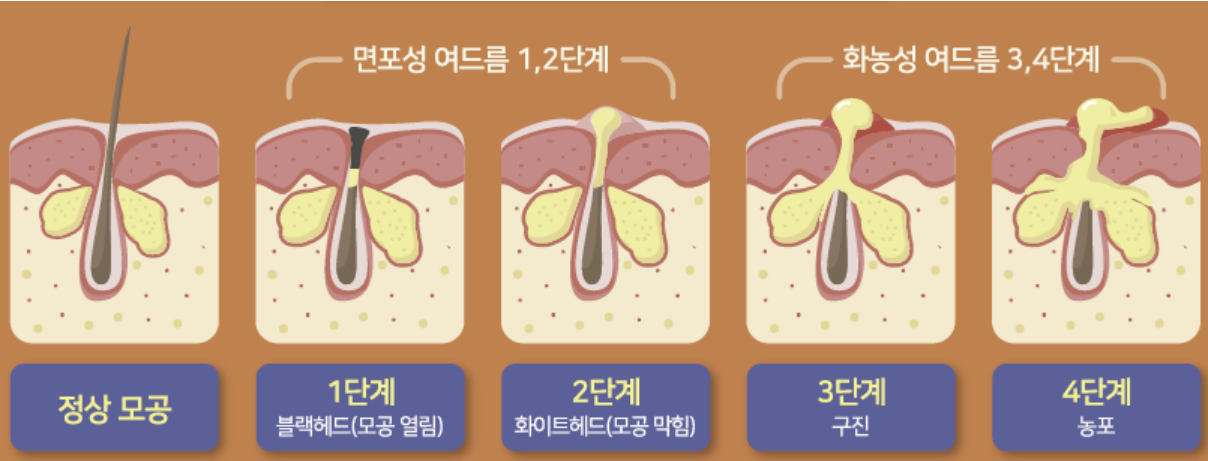
Illustrated acne stages.
Left to right: Normal pore; Stage 1, blackhead (open comedone); Stage 2, whitehead (closed comedone); Stage 3, papule; Stage 4, pustule. The upper brackets are labelled “comedonal acne” for stages 1–2 and “suppurative acne” for stages 3–4.
Some breakouts heal without residual marks when appropriately treated. If inflammation continues and healing is disrupted, marks may remain for several months or almost a year. For some people, the pigmentation left after acne is more troublesome than the original breakout.
Melanin also plays a protective role
Melanin is not merely an unwanted dark pigment. It also has an antioxidant role in protecting skin. During inflammation such as acne, melanin production can increase as part of the skin’s response to reactive oxygen species. Excess pigment deposited at the inflamed site becomes PIH.
Address the underlying skin environment, not only the visible pigment
Brown acne marks can therefore be understood as part of the skin’s defensive response to damage. Stabilizing inflammation and improving the skin environment takes priority over focusing only on pigment-targeting treatment.
Which treatments may be considered?
Initial treatment options may include radiofrequency microneedling devices such as Potenza, QUADESSY, or Morpheus8, and 1450 nm lasers such as Neobeam or ART.
Potenza combines very fine needles with radiofrequency, or RF, energy. The needles deliver energy into the dermis, where controlled heating occurs. This heat can stimulate fibroblasts, the cells involved in collagen and elastin production, while also influencing inflammation and excessive sebaceous-gland activity. The aim is to deliver energy at the required depth while limiting surface injury, addressing acne, pores, scars, and the factors that contribute to pigmentation together.
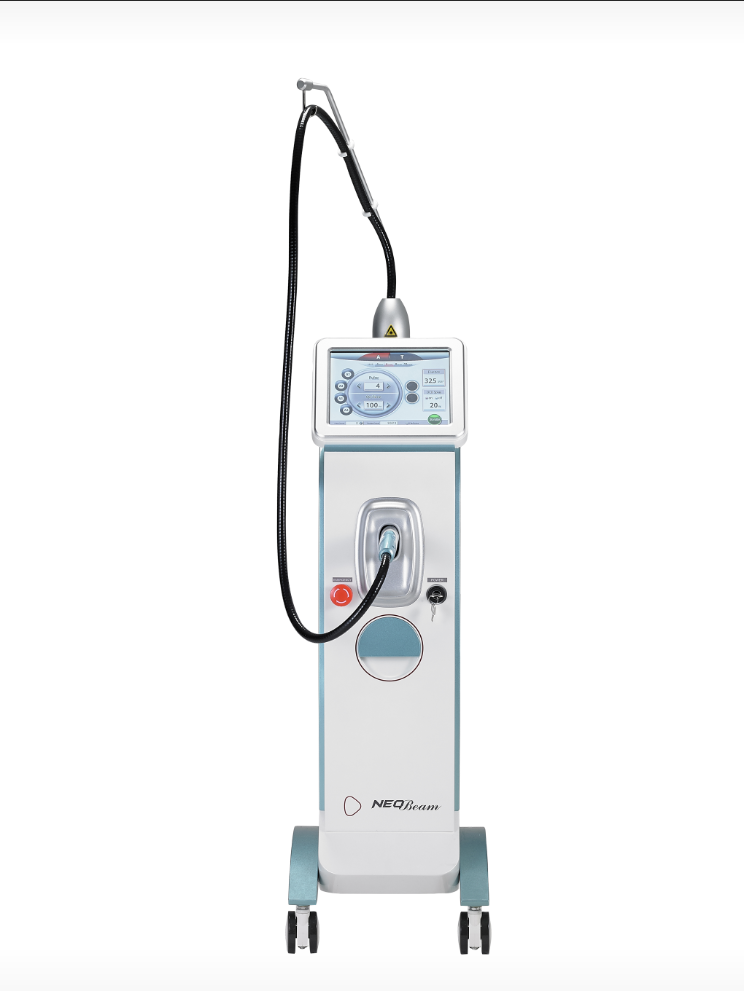
NEOBeam 1450 nm diode-laser device.
NEOBeam uses a 1450 nm diode laser to deliver energy toward the deeper skin around the sebaceous glands. The treatment aims to reduce excessive oil production and inflammatory acne while limiting surface injury. By addressing recurrent acne and inflammation, it may also help address factors that contribute to post-acne pigmentation.
Are pigment lasers always inappropriate?
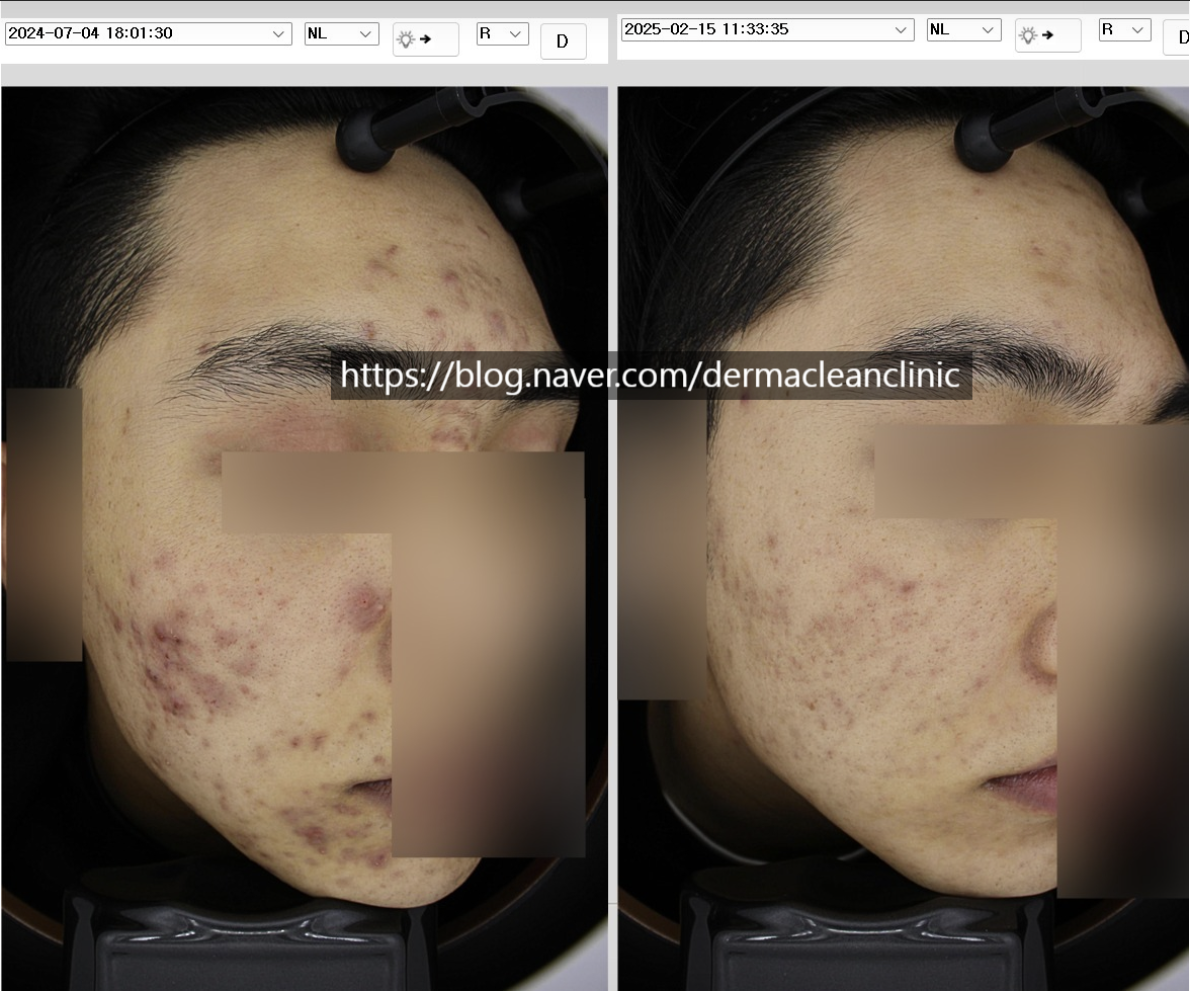
Left: inflammatory acne severe enough to make pigment-laser treatment difficult. Right: after control of inflammation and sensitivity, when treatment of residual pigment may be considered.
No. Once inflammation has fully settled and only stable brown pigmentation remains, cautious laser toning may be considered to address excess melanin.
Starting pigment treatment while acne is still recurring, substantial red marks remain, or the skin is sensitive can instead worsen pigmentation, cause PIH to recur, or increase redness. The treatment order needs to reflect the current skin condition.
When solar lentigines or seborrheic keratoses coexist with acne-related pigmentation, ruby, picosecond, or REEPOT lasers may also have a role in an appropriately planned combination approach.
Treatment order matters
- Control inflammation: first stabilize recurring acne and excess oil with suitable measures such as Neobeam, Potenza, or other oil-control laser treatment.
- Support regeneration: RF treatment, regenerative injections, or skin boosters may be considered for the damaged barrier and dermal environment and for collagen regeneration.
- Address residual pigment: only after the skin is sufficiently stable, select pigment treatments such as ruby or picosecond lasers according to the remaining findings.